What Is Material Drenching and Why Has It Become a Major Interior Design Trend?
If you’ve been browsing architectural projects on platforms like Pinterest or Instagram lately, you’ve probably noticed a shift.
Spaces no longer rely on mixing multiple materials the way they used to.
Instead, many contemporary interiors are built around a single dominant material that flows throughout the entire space.
This approach is known as Material Drenching.
In this article, we’ll explore:
- What Material Drenching really means
- Why it has become a major trend in interior design
- Where it works best
- And how you can apply it effectively in your own projects
Let’s dive in.
What Is Material Drenching? (A Clear Definition)
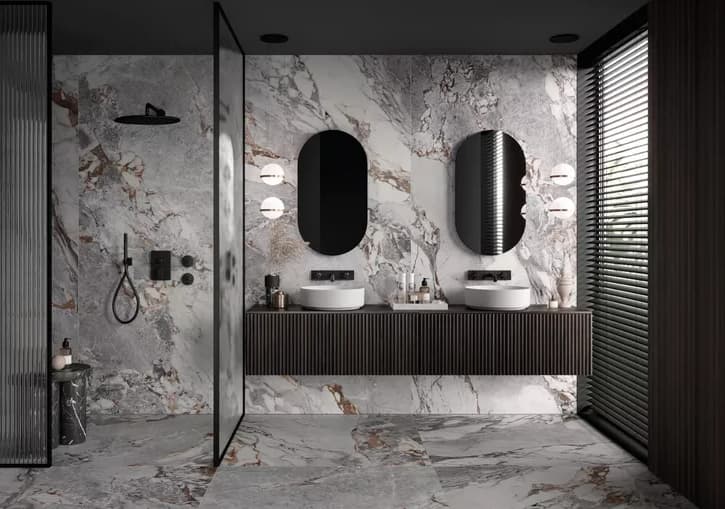
Material Drenching is a design approach where one primary material is used consistently across multiple surfaces within a space.
This includes:
- Walls
- Floors
- Ceilings
- Built-in furniture
- Even custom elements like vanities or shelving
The goal is simple:
To create a cohesive, immersive, and visually powerful environment.
A Real-World Example
Imagine walking into a bathroom where:
- The floor is made of travertine
- The walls are finished with the same stone
- The sink is carved from that exact material
That’s Material Drenching.
Another example:
A living space designed entirely with oak wood:
- Wood-paneled walls
- Matching wooden flooring
- Custom oak cabinetry and furniture
The result? A warm, unified, and high-end atmosphere.
Why Has Material Drenching Become So Popular?
This trend didn’t appear randomly. Several key factors have contributed to its rise.
1. The Shift Away from Cold Minimalism
For years, minimalism dominated interior design:
- White walls
- Neutral palettes
- Clean but often sterile environments
Over time, many people began to feel these spaces lacked personality.
Material Drenching offers the opposite:
- Rich textures
- Strong identity
- A more emotional connection to space
Example
A typical minimalist kitchen:
- White cabinets
- White backsplash
- Grey flooring
Now compare it to a Material Drenching kitchen:
- Stone cabinets
- Stone backsplash
- A monolithic stone island
The difference is striking.
2. Growing Interest in Natural Materials
Modern users are increasingly drawn to:
- Stone
- Wood
- Concrete
- Clay and plaster finishes
Material Drenching allows these materials to truly stand out.
Instead of being accents, they become the main character.
Example
In many contemporary villas:
- Exposed concrete is used throughout
- Walls, ceilings, and even stairs share the same finish
This creates a bold, architectural statement.
3. Influence of Social Media
Let’s be honest:
Spaces that are visually consistent tend to perform better online.
Material Drenching creates:
- Strong visual identity
- Clean compositions
- Highly “shareable” environments
Example
A café designed entirely in deep green:
- Green walls
- Green flooring
- Matching furniture
It becomes instantly recognizable—and highly photogenic.
4. A Strong Sense of Luxury
One of the biggest advantages of Material Drenching is the luxury feel it creates.
When a material flows seamlessly across surfaces:
- The space feels intentional
- The design looks more refined
- The overall experience becomes elevated
Example
A lobby finished entirely in marble:
- Marble floors
- Marble walls
- Marble columns
Even with minimal decoration, the space feels premium.
Best Materials for Material Drenching
Not every material works well with this approach. Choosing the right one is critical.
1. Natural Stone
One of the most popular choices.
Examples:
- Marble in bathrooms
- Travertine in living areas
- Granite in kitchens
2. Wood
Perfect for warm and inviting spaces.
Examples:
- Wood-clad bedrooms
- Cabins and lodges
- Contemporary villas
3. Exposed Concrete
Ideal for modern and industrial aesthetics.
Examples:
- Loft apartments
- Art galleries
- Creative studios
4. Color Drenching (A Related Concept)
A variation of the same idea.
Examples:
- A fully deep-blue room
- Olive green interiors
5. Decorative Plasters
Such as microcement or stucco.
Examples:
- Seamless bathroom finishes
- Textured walls with soft depth
Pros and Cons of Material Drenching
Advantages:
✔ Creates a strong visual identity
✔ Enhances the sense of luxury
✔ Simplifies material selection
✔ Works beautifully in modern spaces
Disadvantages:
❌ Can feel overwhelming if poorly executed
❌ Some materials can be expensive
❌ Requires precision in detailing and execution
A Common Mistake
Using a dark material everywhere without proper lighting.
This can make the space:
- Feel smaller
- Look heavy
- Lose its visual balance
How to Use Material Drenching the Right Way
This is where design makes the difference.
1. Pay Attention to Lighting
Lighting becomes even more important when one material dominates the space.
Examples:
- Hidden LED lighting on stone walls
- Linear lighting in concrete ceilings
2. Play with Texture
Even with one material, texture variation adds depth.
Examples:
- Smooth wood vs. ribbed wood panels
- Polished stone vs. honed finishes
3. Introduce Complementary Elements
To avoid monotony, add contrast carefully.
Examples:
- Furniture in a contrasting color
- Metal accents (black, brass, or chrome)
4. Keep It Simple
Material Drenching is already a strong design move.
Avoid:
- Over-decorating
- Too many additional colors
Where Does This Style Work Best?
Bathrooms
The perfect place to start.
Examples:
- Full marble bathrooms
- Seamless microcement finishes
Kitchens
Examples:
- Matching cabinets, backsplash, and island
Bedrooms
Examples:
- Wood-paneled headboard walls
- Coordinated flooring and wardrobes
Commercial Spaces
Such as:
- Cafés
- Restaurants
- Retail stores
The Future of Material Drenching
This trend is likely to evolve rather than disappear.
Future directions include:
- Integration with smart lighting systems
- Use of sustainable materials
- Combination with biophilic design principles
In other words:
Spaces that feel both natural and contemporary.
Final Thoughts
Material Drenching is more than just a trend.
It represents a new way of thinking about space:
- More immersive
- More expressive
- More intentional
When used correctly, it can:
- Elevate the value of a project
- Improve user experience
- Make a space truly unforgettable
What Do You Think?
Do you find Material Drenching:
- Inspiring or overwhelming?
- Would you use it in your own home or project?
Share your thoughts in the comments below.
I’d love to hear your perspective.
In order to read our updated blogs, click here
Architect Land website-To read more, click the link below
Color 2025 Benjamin moore-To read more, click the link below
Ideas for Christmas Decorations: Classic and Contemporary -To read more, click the link below
Leading Architectural Trends in Dubai-To read more, click the link below
The 2025 Kitchen Design Trend-To read more, click the link below
The Role of Sustainability in the Future of Architecture-To read more, click the link below
The Mesmerizing Pavilion of Expo 2025 Osaka-Kansai-To read more, click the link below
AI in Architecture: Foe or the Ultimate Design Partner?-To read more, click the link below